
Gemma 4: Google’s Next-Gen AI Model for Developers, Creators, and Edge Computing
Imagine turning a text idea into a video, storyboard, or full script in minutes—without paying hefty cloud AI fees. This is the promise of Gemma 4, Google’s latest lightweight AI model designed for developers, indie creators, and edge computing enthusiasts. But is it just another AI release, or could it transform everyday creative workflows?
Learn more from the official release on DeepMind’s Gemma page, an authoritative source for Google AI innovations.
What Is Gemma 4 and Why It Matters
 Gemma 4 represents a major leap in lightweight AI. Unlike its predecessors, it combines advanced reasoning with on-device execution, making laptops and smartphones viable AI platforms. No more relying exclusively on cloud servers for experimentation or rapid prototyping.
Open Models vs Proprietary Systems
Gemma 4 is fully accessible for developers. You can fine-tune it, integrate it into local workflows, and maintain full data privacy. Indie creators benefit from no API costs and no data exposure, giving them autonomy to experiment freely.
Its popularity exploded partly due to this edge-first approach—creators can now run AI without internet or cloud dependencies, which was previously impossible for high-performance models.
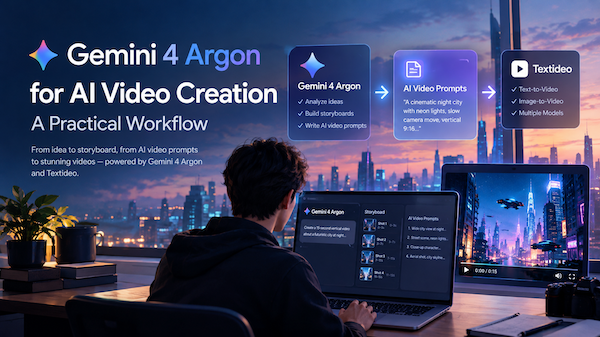
💡 You can also combine Gemma 4 with Textideo to instantly turn scripts into videos, visualizing ideas in minutes.
Core Capabilities of Gemma 4
Gemma 4 isn’t just lightweight—it’s capable, versatile, and designed for practical, everyday creative work.
Advanced Reasoning & Multimodal Inputs
Gemma 4 can summarize complex text, reason through scripts, and generate actionable insights. It also supports text + image inputs, allowing creators to feed storyboards, images, or concept sketches alongside text scripts. This is especially useful for:
- Scriptwriters who want scene suggestions based on story outlines.
- Video editors who want AI-assisted visual concepts from text prompts.
- Indie developers testing multimodal AI ideas without expensive hardware.
On-Device Execution
Running Gemma 4 locally ensures zero latency, high privacy, and offline functionality. This enables:
- Fieldwork applications where internet access is limited.
- Sensitive creative projects where data cannot leave the device.
- Rapid prototyping without cloud delays or costs.
Developer Integration
Gemma 4 supports Python, Node.js, and major ML frameworks, making it easy to plug into automation, content creation, or prototyping pipelines. Indie teams can integrate Gemma 4 into existing scripts, apps, or workflow tools, reducing friction in adopting AI-powered processes.

Real-World Use Cases
Gemma 4 adoption is growing across development, content creation, and small businesses. Here are concrete examples:
- Code Assistance – Auto-completion, debugging, and automation. Developers report faster script creation and fewer errors in routine coding tasks.
- Rapid Prototyping – Startups use Gemma 4 to test AI concepts without heavy infrastructure. MVPs can be generated in minutes rather than days.
- Content Creation – Gemma 4 drafts scripts or storyboards that can be imported into Textideo for video generation. Example: An indie marketer created a 1-minute promotional video in under 10 minutes.
- Data Analysis & Automation – Small businesses summarize reports, automate repetitive tasks, and generate insights locally, saving cloud costs.
Gemma 4 vs Gemini: What Sets Them Apart
| Feature | Gemini | Gemma 4 | Key Takeaway |
|---|---|---|---|
| Deployment | Cloud-only | Cloud + Local | Gemma 4 works on laptops & smartphones |
| Model Size | 175B+ | ~15B | Lightweight but capable |
| Cost | High | Low/Free | Edge execution reduces expenses |
| Multimodal Support | Limited | Text + Image | Context-aware generation |
| Best Use Case | Enterprise AI | Indie creators & devs | Real-time, local, cost-efficient tasks |
| Privacy | Cloud-dependent | Fully local | No data exposure |
| Speed | Cloud latency | Near-instant local execution | Ideal for rapid iteration |
By providing both Gemini (enterprise-focused) and Gemma 4 (indie-focused), Google balances premium AI services with accessibility, democratizing cutting-edge AI tools.
Edge AI: Why Local Models Are Critical
Gemma 4 exemplifies the local-first AI paradigm, unlocking offline and on-device applications:
- Smartphones & Edge Devices: Run AI locally for field projects or sensitive content creation.
- Offline Capabilities: Generate scripts, summaries, and storyboards without internet connectivity.
- Efficiency: Low power usage, yet high reasoning quality—comparable to larger cloud models for daily tasks.
- Emerging Applications: Personal assistants, private AI chatbots, AI-driven content pipelines, and edge analytics.
This approach enables creators and teams to work faster, cheaper, and more privately—key advantages for indie developers and video creators.
Adoption Trends & Community Impact
Gemma 4 has seen rapid uptake, fueled by developer communities, indie creators, and startups:
- Community Contributions: Plugins, fine-tuned models, and integration tips circulate rapidly.
- Innovation by Indie Creators: Unique tools and AI experiments that were previously cost-prohibitive.
- Platform Integration: Platforms like Textideo leverage Gemma 4 to allow script-to-video workflows while keeping content private and on-device.
Limitations & Considerations
While powerful, Gemma 4 has known constraints:
- Hallucinations: Like all LLMs, occasional incorrect outputs, especially in niche topics.
- Not a Replacement for Large Models: Extensive context or computation still requires cloud solutions.
- Hardware Needs: Ensure CPU/GPU and memory are sufficient for smooth operation.
- Updates: Stay current with Gemma 4 releases to maintain workflow reliability.
Understanding these helps creators balance edge AI with cloud capabilities, choosing the right tool for each task.

Implications for Creators and Platforms
Gemma 4 is more than a tool—it’s a building block for creative workflows:
- AI-First Workflows: Quickly move from idea to output: scripts, storyboards, or multimedia content.
- Local AI + Orchestration Platforms: Textideo bridges local AI capabilities and full content pipelines. Creators can generate videos without coding or cloud reliance.
- Case Study – Indie Video Creation:
- Generate a script with Gemma 4
- Import into Textideo
- Auto-generate video with scenes and transitions
✅ Result: 1-minute video ready in under 10 minutes.
This workflow highlights cost efficiency, speed, and privacy, all enabled by edge-first AI and modern orchestration platforms.
Final Thoughts
Gemma 4 signals a shift toward local-first AI, empowering indie developers and creators with tools once reserved for enterprise-level projects. Combined with platforms like Textideo, it allows:
- Rapid AI content creation
- Full workflow control and privacy
- Edge AI experiences previously limited to cloud services
The critical question isn’t just what Gemma 4 can do, but how creators integrate it into daily workflows, unlocking efficiency, creativity, and autonomy.
💡 Explore Gemma 4 today on Textideo and see how quickly your ideas can become fully visualized content.

✏️Leave a Comment