
Veo 4 Is Coming From Script to Screen Faster Than Ever
Have you ever watched an AI-generated video and felt that subtle, unsettling shiver—a fleeting sense that something is just off? You know the one: water flows like liquid mercury, a person’s hand briefly sprouts six fingers, and the lighting seems to come from three separate suns. This is the infamous “Uncanny Valley,” where AI-generated media goes to feel almost real—but not quite.
But what if the valley itself is being paved over? What if the glitches, the oddities, the fleeting strangeness, are about to vanish, leaving behind cinematic-quality AI-generated films? This isn’t just science fiction; it’s happening now.
Google DeepMind is quietly reshaping the video AI landscape. If Veo 1.0 was a toddler learning finger painting, and Veo 3.1 is a talented film student, then Veo 4 is poised to become the James Cameron of artificial intelligence—a tool that could democratize high-end filmmaking entirely.
Let’s dive into what Veo 4 promises, the market implications, and why independent creators should sit up and take notice.

The Evolution of Veo: From Pixels to Narrative Worlds
Understanding Veo 4 requires examining the lineage of Google’s AI video models.
Veo 1.0: The Pioneer
Released in May 2024 during Google I/O, Veo 1.0 marked Google’s first serious attempt at text-to-video generation.
| Feature | Veo 1.0 Specification |
|---|---|
| Video Length | ~60 seconds |
| Resolution | 1080p |
| Core Capability | Text-to-video generation, basic physics modeling |
| Limitations | No native audio, limited control over elements |
While it impressed tech enthusiasts, the videos often felt like “silent movies.” You had visuals, but the soul—the sound, timing, and logic—was missing.
Veo 2.0: Early Expansion
By late 2024, Veo 2 improved continuity and realism:
- Extended video duration
- Improved physics engines for object motion
- Better scene and character consistency
These were incremental improvements, but the AI still lacked native audio and professional-level control.
Veo 3.1: The Professional
Veo 3.1, arriving in late 2025, moved beyond visuals into true multimodal AI generation. Its core upgrades include:
| Capability | Performance |
|---|---|
| Native Audio | Sound effects, ambient audio, dialogue synchronized |
| Frame Control | Start and end frames specification |
| Object Insertion | Ability to add elements into existing scenes |
| Scene Extension | Extending video length seamlessly |
| Prompt Adherence | Best-in-class MovieGenBench performance |
| Physics Realism | Superior to competitors in side-by-side testing |
While Veo 3.1 was impressive, creators still faced temporal consistency issues—the AI might forget key props or costume details mid-scene.
Veo 4: The Prophecy
Veo 4 represents the next leap: an AI capable of long-form, 4K, physically and temporally coherent video generation, with creative control approaching that of a human director.
Predicted Core Upgrades
| Dimension | Veo 3.1 | Veo 4 Prediction | Improvement |
|---|---|---|---|
| Resolution | 1080p | 4K native | 4× pixels |
| Duration | ~60 seconds | 10+ minutes | 10×+ |
| Control Dimensions | 5 | 12+ | 2.4× |
| Generation Speed | Minutes | Seconds (streaming) | 10×+ |
| Audio Quality | Mono/stereo | Spatial audio, multi-track | Major qualitative leap |
Veo 4 is expected to integrate Google’s Gemini “Infinite Context” window, allowing videos to maintain continuity across multiple scenes. Imagine a coffee cup left on a table in Scene 1 still being there, half-empty, in Scene 5. That’s more than video generation—it’s world-building.
Beyond Visuals: Spatial Audio and Physics
Sound is the overlooked hero of video AI.
- Veo 3.1 introduced native audio: sounds are generated in sync with visual events.
- Veo 4 is predicted to add spatial intelligence audio, simulating realistic environmental acoustics:
- A car zooming past a brick wall vs. an open field would have distinct reverb
- Dialogue and ambient soundtracks could be spatially separated and controlled individually
For indie creators, this could replace expensive Foley setups while giving films cinematic depth.
Director’s Chair UI: Total Creative Sovereignty
Veo 4 will likely include a non-linear editing interface, enabling granular control over every element:
- Change color, scale, or movement of objects
- Adjust timing of an actor’s steps
- Control lighting, camera angle, and virtual lens focus
- In-paint specific sections without regenerating the whole video
| Control Feature | Description |
|---|---|
| Timeline Editing | Arrange multiple shots with keyframes |
| Camera Movement | Push, pull, pan, track |
| Lighting Control | Time-of-day, weather, color temperature |
| Asset Libraries | Characters, props, scenes, animations |
| In-Painting | Modify specific regions without full render |
The paradigm is shifting from prompt engineering to virtual directing, enabling anyone with a vision to create films indistinguishable from real-world productions.
Competitive Landscape: Veo 4 vs. Market Rivals
Sora’s Closure and Market Shifts
OpenAI’s Sora initially led the market in AI video realism. However, rumors indicate that Sora may close access to its T2V tools in early 2026, creating a vacuum for creators seeking long-form AI video. Google is poised to fill this gap with Veo 4, offering integration into YouTube, Workspace, and Gemini, and potentially providing enterprise-level content generation.
Seedance 2: The Rising Challenger
Meanwhile, Seedance 2, a newcomer to the AI video space, has gained rapid popularity due to its ease of use and social media–friendly outputs. Its niche focus is short-form dance and music videos, optimized for viral content. While Seedance 2 can’t compete with Veo’s cinematic quality, it highlights a trend: AI video is now mainstream, and different tools are targeting specific creator needs.
| AI Video Model | Primary Strength | Limitation |
|---|---|---|
| Veo 4 | Long-form cinematic, 4K, spatial audio | Enterprise focus, learning curve |
| Sora 2 | Realism, cinematic textures | Likely closing soon, limited accessibility |
| Seedance 2 | Short-form viral content | Not suitable for long narrative storytelling |
| Runway Gen-3 | Creative tools, animation | Resolution limits |
| Kling 1.5 | Ultra-long videos | Regional availability |
Temporal Consistency and 3D Understanding
A core challenge for AI video has always been temporal consistency—remembering objects, costumes, or lighting across frames. Veo 4 is expected to introduce:
- Scene memory across 10+ minutes
- 3D latent understanding: the AI predicts depth, rotation, and object physics rather than just pixels
- Multi-camera coherence: multiple angles of the same scene maintain continuity
| Aspect | Veo 3.1 | Veo 4 Prediction |
|---|---|---|
| Object Consistency | Partial | Full across 10-min scenes |
| Physics Accuracy | High | World-model level |
| 3D Representation | Limited | Depth, normal, and spatial maps |
| Multi-camera | None | Automatic cross-angle coherence |
This makes Veo 4 suitable not just for ads or shorts, but for previsualization in feature films.
Industry Implications
The arrival of Veo 4 could disrupt traditional production workflows:
| Sector | Impact |
|---|---|
| Independent Film | High-quality previsualization and VFX at low cost |
| Advertising | Multi-version campaigns for A/B testing without physical shoots |
| Social Media | Professional-level content creation for individual creators |
| Education | Reconstruct historical or scientific visualizations |
| Gaming | Rapid prototyping for cutscenes or interactive cinematics |
Economic Displacement vs. Creative Empowerment
If anyone can produce a 10-minute, 4K, spatially-audio-synced video from their laptop, the technical skill of video production becomes commoditized. The true premium shifts to originality, vision, and storytelling. Tools like Veo 4 democratize execution while challenging creators to innovate conceptually.

The Technical Leap: 4K, Streaming, and Multimodal Integration
Veo 4’s predicted 4K output is more than just resolution—it’s micro-detail fidelity. Every pore, water droplet, and subsurface light effect is rendered with near-physical accuracy.
- Streaming generation: seconds per frame instead of minutes
- Incremental updates: modify specific segments without full renders
- Edge deployment potential: cloud-backed, but possibly accessible on high-end local devices
| Feature | Current Standard | Veo 4 Prediction | Improvement |
|---|---|---|---|
| Output Resolution | 1080p | 4K | 4× pixels |
| Generation Time | Minutes | Seconds | 10× faster |
| Audio | Mono/Stereo | 5.1/7.1 Spatial | Immersive |
| Temporal Context | 1-2 min | 10+ min | 5×+ |
| Control | Text + frames | Full director interface | Major usability leap |
When Will Veo 4 Arrive?
Google’s previous release cadence suggests a likely debut:
- Veo 1: May 2024 (Google I/O)
- Veo 2: November 2024 (AI event)
- Veo 3: December 2025 (official blog)
- Veo 4: Likely May 2026 (Google I/O) or November 2026
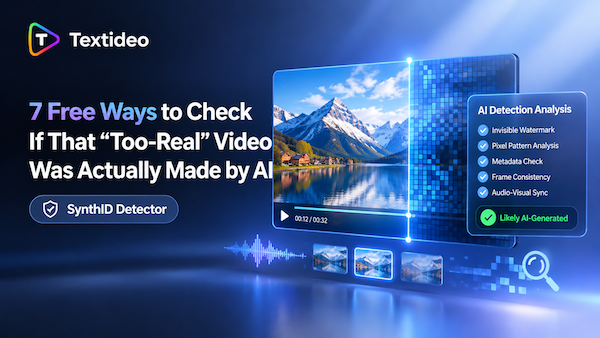
Beta tests and fine-tuning are ongoing, with TPU v6 scaling, safety filters, and SynthID watermarking integrated at the DNA level to ensure traceability without hindering creative freedom.

The Human Factor: Authenticity, Ethics, and Adoption
As AI blurs the line between captured and generated content:
- SynthID ensures creators can verify AI-generated media
- Western audiences remain sensitive to deepfake ethics
- Advertising could shift dramatically, with $100 billion campaigns potentially generated entirely in AI
Yet, creative expression remains safe from automation—originality and vision cannot be cloned. The AI is a tool, not a replacement.
Veo 4: Redefining Creative Workflows
-
Virtual Director’s Assistant Veo 4 is not just a technical upgrade—it’s a creative revolution. By enabling filmmakers to manipulate lighting, camera angles, and character motion with a few intuitive controls, Veo 4 positions itself as a virtual director’s assistant for every creator.
-
Granular Object Control The granular object control allows adjustments at the frame level without regenerating entire sequences, making iterative experimentation faster and less resource-intensive.
-
Democratizing Cinematic Production For indie creators, Veo 4 removes the traditional barriers of expensive equipment and studio setups, democratizing access to cinematic production. Unlike previous AI models, Veo 4 can maintain temporal consistency across multi-minute sequences, ensuring that props, wardrobe, and environmental details remain accurate.
-
Seamless Production Integration Veo 4 integrates seamlessly with existing production pipelines, allowing content creators to export 4K videos directly to editing software or social media platforms.
-
Workflow Redefinition With its combination of multi-modal understanding, real-time feedback, and scene memory, Veo 4 doesn’t just generate video—it reshapes the entire creative workflow, redefining what’s possible in both professional and independent filmmaking.

Final Thoughts: The Veo 4 Horizon
Veo 4 may well be the first AI capable of creating fully realized cinematic experiences from text, images, or simple prompts, making high-end filmmaking accessible on a scale previously unimaginable. With competitors like Sora fading and Seedance 2 targeting niche viral content, Google’s model is positioned to dominate the professional and enterprise landscape.
For creators, this is both exhilarating and disruptive. The future isn’t about learning how to use expensive cameras or mastering complex CGI pipelines—it’s about directing worlds, telling stories, and crafting originality.
Next time you see a breathtaking sunset in a video, ask yourself: did the sun really set, or did Google just imagine it for you?
✏️Leave a Comment