
Nano Banana 2.1 vs Pro (2026): Better for Less
The one-line answer: Google's new Nano Banana 2.1 beats Nano Banana Pro on most of Google's own benchmarks — at under half the price — yet Pro still wins the images that actually ship. The mistake is treating this like a normal upgrade. It isn't. This is a two-lane decision, and the lane you pick should follow your brief, not your budget reflex.
Here's the roadmap: why 2026 broke the usual "pay more, get more" logic, what each lane actually buys you, a decision matrix you can screenshot, and the three mistakes that waste the most money.
Why 2026 broke the upgrade rule
For two years the pattern was simple: the "Pro" or "Max" tier was the better model, full stop. You paid more and got more. That contract is now void inside Google's own image family.
Two forces collided this year:
- Adoption is everywhere. Nano Banana 2.1 rolled out on October 6, 2026 across the Gemini app, AI Mode in Search, Google AI Studio, Flow, Stitch, Google Ads, and the Gemini Enterprise Platform. It is now the default image engine for a huge share of Google's surface area.
- Trust is lagging. The same community that adopted it is openly confused. The model lineup — Nano Banana, 2, 2 Lite, 2.1, Pro — reads like version-number noise, and the most-asked question in practitioner threads is still the blunt one: "Is it actually better than Pro?"
That gap — adopted at scale, understood by almost no one — is exactly where money gets wasted. People either over-pay for Pro on work 2.1 handles fine, or under-buy 2.1 and ship hero assets that needed Pro's polish.
The Two-Lane framework
Stop thinking "2.1 vs Pro" as a quality ranking. Think of it as two lanes with different jobs:
- The Efficiency Lane = Nano Banana 2.1 (Gemini 3.6 Flash). Built for volume, speed, and cost. Flash-tier latency, roughly a quarter of Pro's price, up to 14 reference images, 4 characters + 10 objects held consistent, 1K/2K/4K output, and up to 4 results per run.
- The Studio Lane = Nano Banana Pro (Gemini 3 Pro Image). Built for the final, unforgiving asset. Highest fidelity, up to 10 results per run, and the edge on text-heavy and "needs-care" renders.
The ownable rule that falls out of the data:
2.1 wins the average. Pro wins the tail.
On the average image — the infographic, the social post, the product variant, the wide panorama — 2.1 is not just "good enough," it scores higher than Pro on Google's own benchmarks. On the tail — the one hero frame where a typo, a left-right flip, or a soft edge gets seen by a client — Pro is still the safer bet.
What the benchmarks actually say (the tension, in numbers)
Google's own model card scores 2.1 (with thinking on) above Pro on nearly every axis:
| Benchmark (Google-reported) | 2.1 (Thinking) | Pro |
|---|---|---|
| Text-to-Image Overall Preference | 1050 | 935 |
| Multi-Character Consistency | 1106 | 1011 |
| Infographic Accuracy | 0.521 | 0.265 |
| Mask / Ink-Based Editing | 1049 | 927 |
| Stylization | 1062 | 990 |
And it is not just Google's house numbers. On the third-party Arena blind test (October 6, 2026), 2.1 scored 1328 on text-to-image versus 1248 for Pro, and 1428 vs 1390 on image editing.
Now the counter-weight — price per image:
| Model | 1K | 2K | 4K |
|---|---|---|---|
| Nano Banana 2.1 | $0.0336 | $0.0504 | $0.0756 |
| Nano Banana 2 (outgoing) | $0.067 | $0.101 | $0.151 |
| Nano Banana Pro | $0.134 | $0.134 | $0.240 |
2.1 is ~4× cheaper at 1K and still ~3× cheaper at 4K. So on paper, and on aggregate blind votes, the cheap model wins. That is the part the marketing headlines got right.
Where Pro still earns its 4×
The benchmarks measure the average. They don't measure the brief that gets rejected. Practitioner feedback is consistent here: 2.1 sometimes renders "cartoonish" where Pro stays refined, and Pro is the lane you reach for when one asset has to be flawless. Concretely, Pro's real advantages are:
- Up to 10 results per run (2.1 caps at 4) — materially faster when you need a batch of hero candidates.
- Text-heavy and long-form renders where 2.1's known weak spots bite: small on-image text blurs at 1K, long paragraphs and page-length copy stay unstable.
- The "needs-care" tail: left/right placement confusion, complex 3D/mechanical perspective, and factual accuracy on world-knowledge scenes — all areas Google's own card flags as limited in 2.1.

The decision matrix (screenshot this)
| Your situation | Take the lane |
|---|---|
| High-volume drafts, social posts, infographics, wide panoramas | Efficiency (2.1) |
| Batch generation through the API on a budget | Efficiency (2.1) |
| You need more than 4 candidates from one prompt | Studio (Pro) — 10 max |
| One hero/final asset where fidelity must be flawless | Studio (Pro), or run both and keep the better |
| Small on-image text or long paragraphs must be perfect | Studio (Pro) |
| Up to 14 references, 4 characters + 10 objects | Either — 2.1 handles it |
| "Just make me 10 variants to choose from" | Studio (Pro) |
The honest default: start in the Efficiency Lane. Move to Studio only when a specific constraint above forces it. Most daily image work lives in the average, where 2.1 is both cheaper and — by the numbers — better.
Three mistakes that waste the most money
1. Assuming Pro is always the better model. It isn't, and the data says so loudly: 2.1 scores above Pro on Google's own card and on Arena, at a quarter of the cost. Auto-reach for Pro and you quietly 4× your image bill on work a cheaper model does better.
2. Assuming 2.1 is enough for everything. It isn't. Small text blurs at 1K, left/right placement flips, long copy is unstable, and you're capped at 4 outputs per run. Ship a hero asset that needed Pro's text or batch handling and you'll pay for it in revisions.
3. Forgetting the clock on Nano Banana 2. The outgoing NB2 (Gemini 3.1 Flash Image) shuts down in the Gemini API on October 29, 2026. If your pipelines or saved prompts still call it, re-test them on 2.1 now, while you can still compare side by side — don't discover the breakage on the 30th.
The takeaway
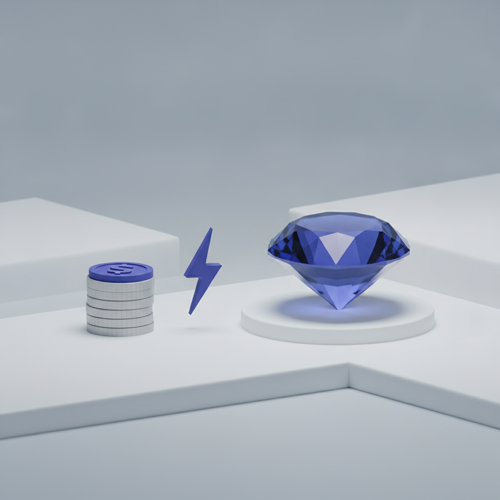
The "pay more, get more" rule died the day 2.1 shipped. Pick the lane by the job, not by the price tag in reverse — most of your image work belongs in the Efficiency Lane, and the Studio Lane is a precision tool for the tail, not a default.
When your winning still is locked, the next move for a lot of teams is turning that frame into a short video ad or a product clip. That's the gap textideo is built to close — image-to-video, without re-prompting the whole scene.
Rule to remember: 2.1 wins the average. Pro wins the tail. Start in the Efficiency Lane, and only change lanes when the brief forces it.
Sources
-
Google's new image model Nano Banana 2.1 generates better images for less money — pricing table and full Google benchmark card, independent reporting.
-
Google launches Nano Banana 2.1 — comprehensively outperforms Pro in official tests — third-party Arena scores and the official model-card limitations list.
-
Nano Banana 2 pricing (Reddit) — community discussion confirming the "trades blows with Pro at ¼ the price" perception.
-
Nano Banana 2 is not bad, it is just named wrong (Reddit) — practitioner view on quality-vs-cost and the "cartoonish vs refined" split between tiers.
-
What is wrong with Nano Banana 2 (Reddit) — real-world failure modes (left/right confusion, prompt clarity) that map to 2.1's known limits.
✏️Leave a Comment