
The cast changes faces by episode four
Without a locked cast sheet the lead grows a new jawline on every generation, and viewers see it instantly because a face fills half of a vertical frame.
A Chained Together AI drama turns one sentence into a finished vertical episode: two leads linked at the wrist, a story engine that writes the hook and the cliffhanger, and a 9:16 cut composed for a phone instead of cropped into one. Cast yours on Textideo with a premise and a photo.
Create My Chained Together AI DramaPreview before you render · No camera, no crew, no editing software
One good frame is easy. Twenty that agree with each other is where a Chained Together AI drama usually stalls.
Without a locked cast sheet the lead grows a new jawline on every generation, and viewers see it instantly because a face fills half of a vertical frame.
A weak emotional close-up often costs more than the first full pass. Regenerating whole timelines instead of the single failing scene is what drains a credit balance fastest.
Most first attempts end politely. Retention comes from the last five seconds asking a question only the next instalment can answer.
You have probably tried this already: one pretty two-shot, then a second generation where the hair, the coat and the chain are all different. These parts are here to stop that happening at episode four.
Set the pair once, down to the exact link between their wrists, and that binding stays constant across every scene. Nothing has to explain why the chain changed length between shots, because it does not change. That single constraint is what separates a Chained Together AI drama from a pile of unrelated clips.
Each instalment is laid out as hook, escalation, stall and cliffhanger instead of dumped out as prose. The opening seconds carry the shock, and the closing seconds plant the question the next episode answers.
Output comes back native 9:16 with captions burned in for the sound-off scroll, so what you preview on a desktop is what lands in a feed. Export the same Chained Together AI drama in landscape or square when the story moves to YouTube.
Anyone can render one striking shot of a chained pair. The difficulty is twenty of those shots agreeing with each other, and that is the problem these parts exist to solve.
Two characters who cannot walk away is conflict that arrives preloaded. Every scene inherits tension for free: one pulls forward, the other resists, and neither has the option of leaving the frame.
Character design is locked before rendering rather than hoped for afterwards. The same two faces, the same coat and the same chain show up in the opener and in the season finale. Identity drift is the failure mode most vertical series die from, so it gets solved first.
Instalments are planned around questions left open, so the episode ends on a beat that demands the next tap rather than fading out politely. Retention is designed into the structure, not chased in the edit.
A line that reads flat gets rewritten and regenerated on its own. Correcting episode three does not push episodes four through twenty back into the queue, which matters once rerolls start costing real time.
The frame is composed for a phone instead of cut down from a landscape master. Faces land where portrait framing wants them, important because close two-shots are where a Chained Together AI drama actually lives.
Cast, wardrobe and settings roll into the next instalment and the next season, so the twentieth one you produce takes noticeably less effort than the first.
From a one-line premise to a posted instalment, this is the whole loop behind every Chained Together AI drama.
STEP 1 / 3
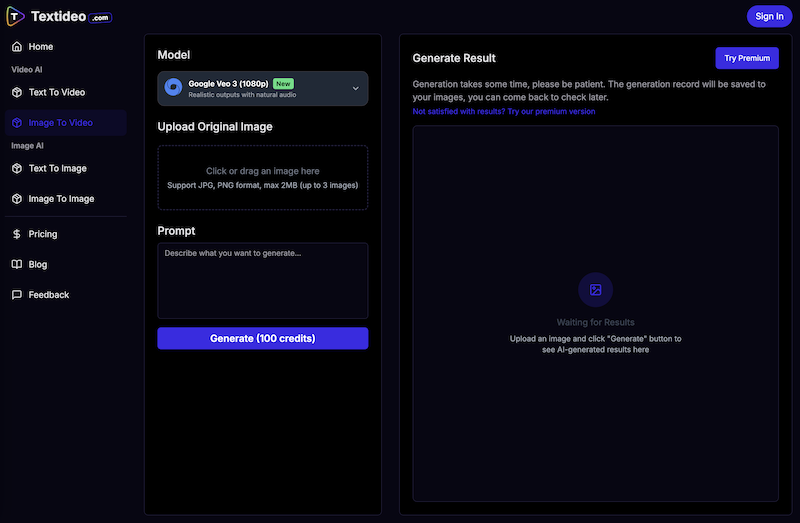
Describe your two leads or upload reference photos, then give each one fixed tags: hair, coat, one permanent detail. Every scene reuses that cast sheet.
STEP 2 / 3
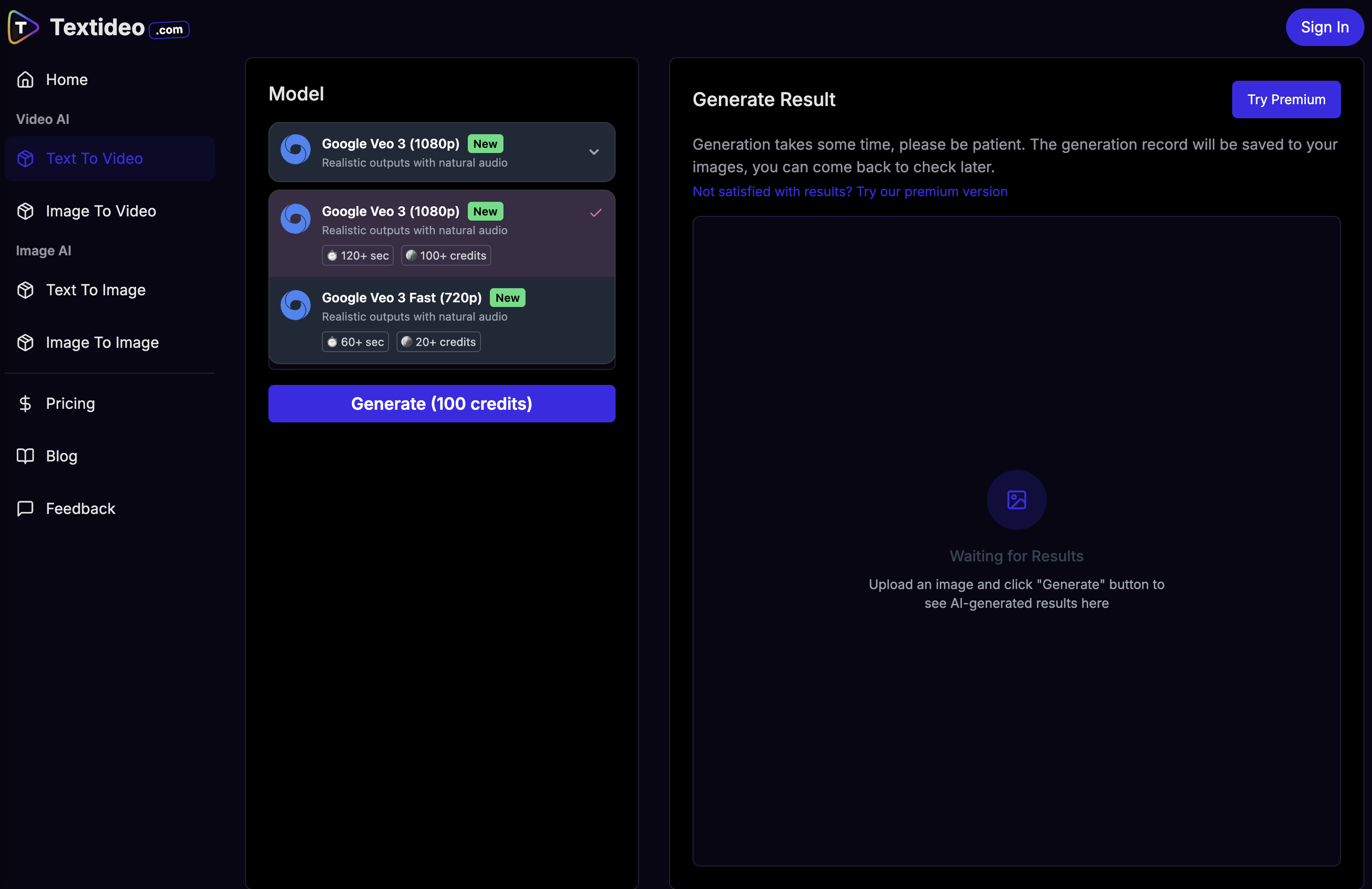
Say what happens and who wants out. The story engine shapes it into beats: cold open, escalation, reversal, and the question that closes the instalment.
STEP 3 / 3
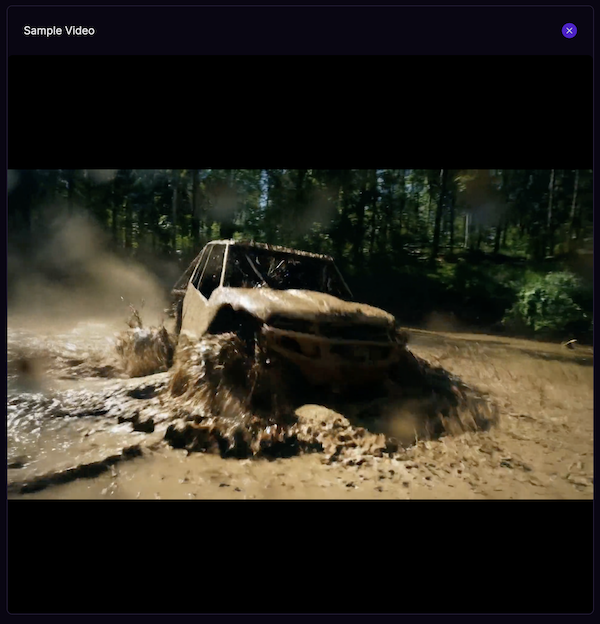
Preview the vertical cut, regenerate only the shot that fails, then let the unfinished question carry straight into the following Chained Together AI drama episode.
Starting shapes that work because the setup does the heavy lifting. Take one for your Chained Together AI drama, swap the setting, and you have a season.
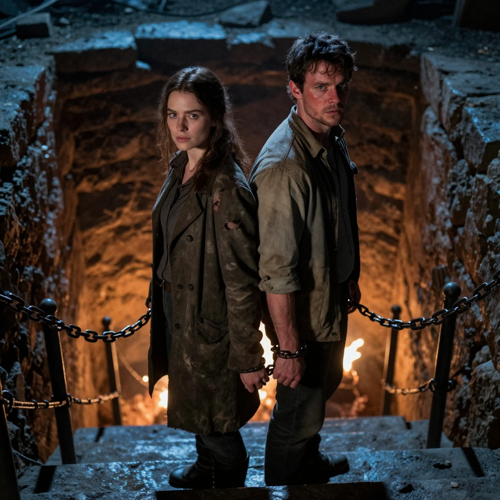
Two strangers come to chained wrist to wrist at the bottom of a stone pit with heat rising behind them. The whole season is a vertical ascent: one leads, one lags, and the line between them decides who clears the next ledge.
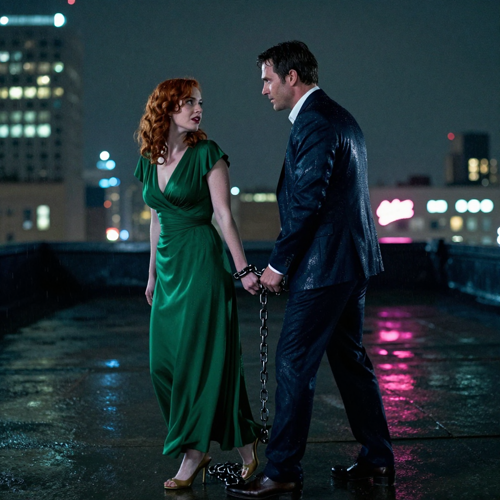
A rooftop confrontation where neither side can storm off, because the link will not allow it. The pair trade insults in tight two-shot until one of them saves the other, and that turn is what hooks the audience into episode two.
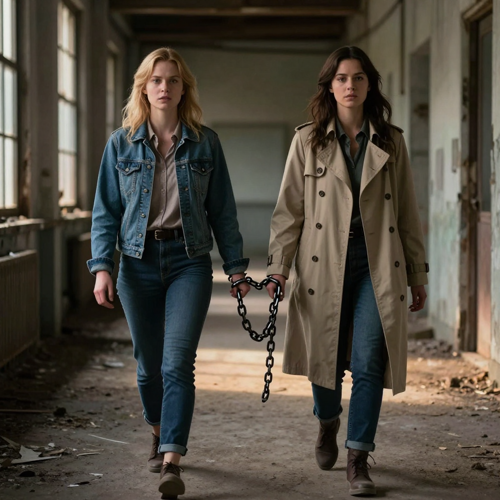
A corridor, one exit, and two bodies that have become a single physics problem. This variant turns a walk into a negotiation and gives every instalment a reason to stall exactly where it hurts the most.
Very different people run the same pipeline, and what they share is the need for serialized output without a production budget.
Turn the tethered-duo format into daily posts instead of another hallway reshoot, and let a series accumulate instead of resetting every Monday.
Publish sixty-to-ninety-second instalments on a schedule, with the cast locked so anyone bingeing the back catalogue never sees a face change, which is the complaint that kills most Chained Together AI drama channels by episode five.
Take the chapter where two enemies are forced together and read it back as video long before you can afford a table read or a location scout.
Put your own faces in rather than handing a phone to a friend: the same joke landing with better light, and no argument about retakes.
Four setups you will re-use for a whole season, each generated from a single sentence and stored as a reusable asset.
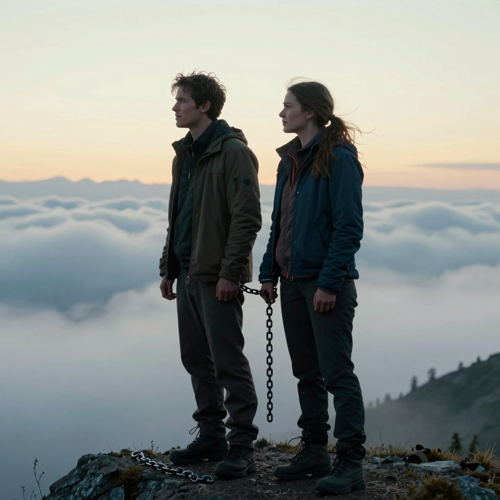
A wide reconciliation moment where the pair finally move in step, framed at eye level the way a vertical scene wants.
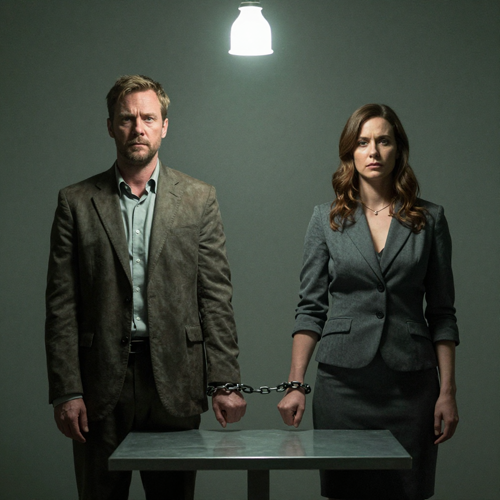
An across-the-table two-hander lit by a single bulb, the shot size where a vertical series does most of its talking.
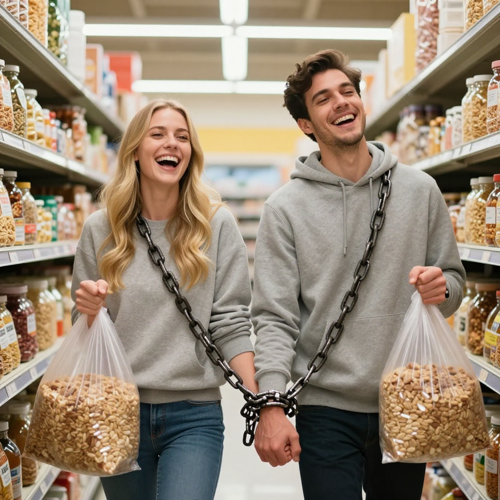
The comedy reading of the format: an ordinary errand made impossible by the link between them, built to farm comments.
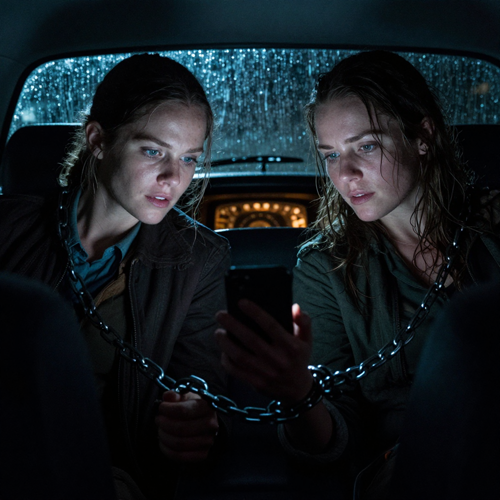
A night scene lit by a phone screen and passing streetlight, keeping faces readable on a dim display in the dark, a favourite of Chained Together AI drama writers for mid-season reveals.
Other single-purpose generators on Textideo you can pair with a vertical series.
Everything creators ask before launching a first Chained Together AI drama season: cast consistency, episode length, vertical export and how the cliffhanger is built.
It is a scripted vertical story in which two leads are physically linked and cannot separate, so every scene arrives with conflict already built in. Unlike a single AI clip, each instalment is planned as part of a series: the same cast returns, the unresolved plot carries forward, and the episode closes on an open beat rather than a fade-out.
A normal text-to-video box renders one shot from one prompt and remembers nothing afterwards. This one keeps characters, wardrobe, setting and open plot threads locked between instalments, so episode ten still belongs to the same season. It plans beats and cliffhangers instead of animating a single moment.
Neither. You work from descriptions and optional reference photos, so there is no shoot day and no timeline to learn. You approve a preview before the expensive pass, and if a line reads flat you rewrite that line and regenerate only the shot that failed.
Most vertical series hold between sixty and one hundred and twenty seconds, enough room for a hook, one reversal and a cliffhanger. Because every beat is rendered as its own scene, you decide how much ships in one instalment and can cut a teaser version later from the same assets.
Give each lead immutable visual tags before you render: exact hair, one permanent detail, a signature coat. Those tags are stored as a locked cast sheet, and later instalments condition on it rather than reinventing the face. Locking portraits once at the start costs far less than repairing drift halfway through a season.
Yes. Upload reference photos of yourself, your co-star or a character design and they become the locked identity for every scene. That is what lets a duo put their own faces into the story instead of casting stand-ins, and why a Chained Together AI drama reads as personal rather than stock.
Four beats: a shock inside the opening seconds, an escalation that raises the stakes, a stall where escape stops looking possible, and a final question the viewer wants answered. That shape is why an episode holds attention rather than playing like a trailer for a show that never arrives.
Yes. Output renders native vertical 9:16 with captions burned in for the sound-off scroll, so it uploads to TikTok, Instagram Reels and YouTube Shorts without a crop or a separate caption pass. Landscape and square exports cover the same story for YouTube or a feed post.
Six is a practical first run: long enough to prove the premise earns a second season, short enough that you finish before patience runs out. It also gives you room to establish the pair, break their truce once, and leave them stranded mid-cliffhanger.
Yes. Because each instalment inherits the cast, locations and unresolved plot from the one before it, extending a short into a season means writing new beats against assets you already own. You chain the next instalment rather than starting from a blank prompt.
Pick a pair, describe the bind they share, and close your first Chained Together AI drama on a question nobody can walk away from. Start on Textideo with a sentence and a photo.
Create My Chained Together AI DramaPreview before you render · No camera, no crew, no editing software