A Lonyo AI dance clip takes one still photo and drops it into the eight-count loop people keep replaying, with no camera roll of failed takes. Upload a full-body frame facing the lens, pick the routine, and the motion transfer layer redraws you pose by pose while your face and outfit stay from the picture. You get a vertical 9:16 clip with a beat under it, ready to post.
Rated on the two things that decide a dance clip: whether the face holds through the squat, and whether the beat lands on count one. No choreography to learn - no shoot - one photo in, one loop out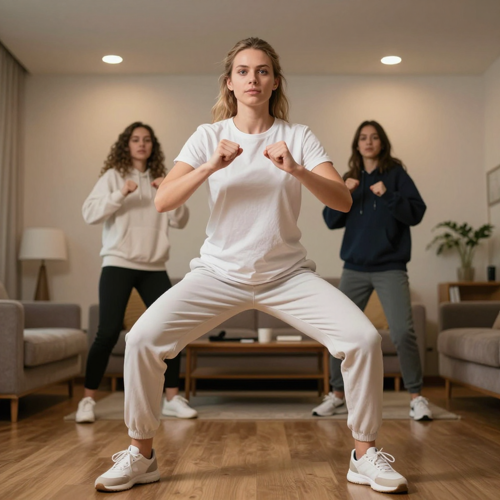
The routine behind Lonyo AI dance is a hip and footwork pattern that repeats on the eight, which is why it survives being pressed into a loop. On Textideo the counts are already written; you bring one photo and the framing.
Make Your Lonyo Dance ClipThree places where a first attempt breaks.
A clean source frame, the routine at a tempo you can count, and a vertical export you can post.
Full body if you have it, feet and hands in shot, facing the lens, plain background, even light. Skip crossed arms and anything across the torso.
Choose the eight-count loop and a bed you can count along to: around 100 to 130 beats per minute keeps one count readable.
Take the vertical file into your app and attach the sound there, so the post lands on the trend instead of next to it.
Three things decide whether a Lonyo AI dance clip looks like a person dancing or a picture wobbling: the routine, the frame you feed in, and how tightly the loop closes.
Three framings that survive motion transfer: a living-room crew, a solo eight-count on a plain wall, a rooftop shoulder isolation. Each is a starting pose, a camera height and a light direction.
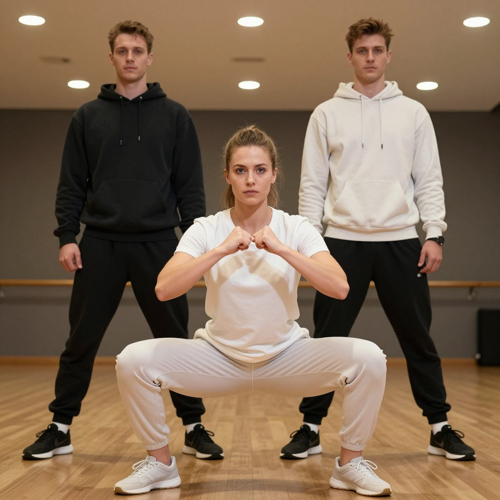
A Western woman in her late twenties in a white T-shirt, light joggers and trainers, centre frame, sunk into a knees-out squat with both fists at her chest, two friends in hoodies stepping behind her. Camera at chest height three metres back, warm ceiling light.
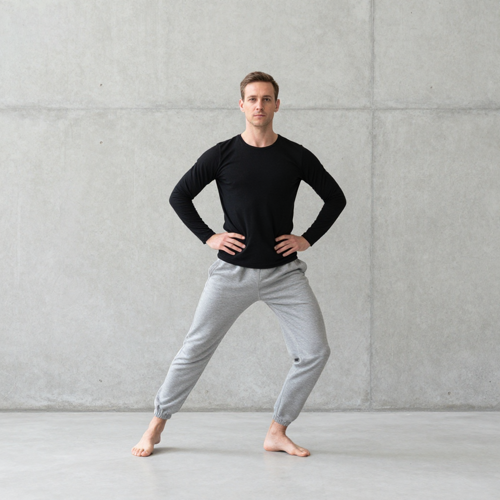
A Caucasian male dancer in his thirties in a black long-sleeve top and grey sweatpants, full body facing the lens against a plain concrete wall, hips isolating left then right. Even frontal daylight, camera at hip height, space below the feet.
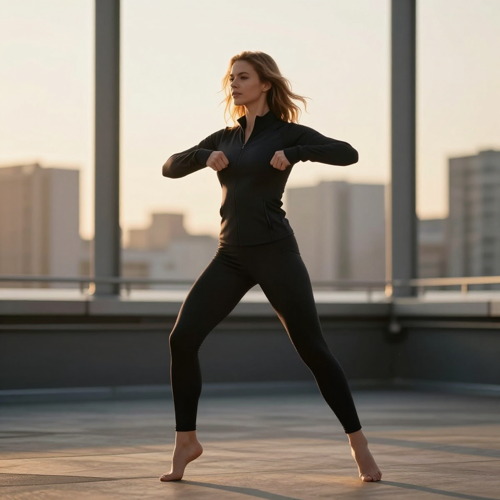
A European-looking woman in a fitted dance jacket and full-length leggings on a rooftop at golden hour, shoulders rolling while the feet stay planted. Low sun from camera left, rim light on the hair, blurred skyline, tall framing.
Four input types, and what each does to a Lonyo AI dance routine once movement is applied.
Four kinds of poster, and four reasons a first Lonyo AI dance attempt comes out wrong.
You have seen the loop twice today and the beat is stuck in your head. What you lack is a tidy full-body photo of yourself. One still covers it.
You need a clip by Thursday and nobody dances, so the slot goes to a static graphic. A generated loop fills it without a shoot, provided the person in the photo is cleared and the caption says AI-generated.
You care about the cut, not the choreography: where count one lands, whether the loop seams, whether the face holds past the second replay.
You want to see how the pattern reads on a body before teaching it to a room. Put your own photo in and watch the isolations at half speed.
A genre, not a single clip: a name-shaped sound hook, a dance-cover routine, and a motion transfer layer anyone can drop into.
Lonyo reads as a name more than a word: a stage-name spelling carried through dance-cover culture, drifting between Lonyo, Loonyo and Lonio. A near-homophone strand and a 2000 garage title share the sound.
The model follows a real routine pose by pose and redraws the person from your photo in each frame. Your face and outfit come from the picture; the timing comes from the choreography.
Count the Lonyo AI dance routine in eights first: one movement per count, a freeze on count one, and an ending pose that matches the opening one.
Use a platform-provided sound, a licensed bed, or the instrumental that ships with the clip. A famous hook you do not control is the fastest way to get a post muted.
Your own face, a photo you own, or an adult who agreed: that is the whole consent test for a Lonyo AI dance clip. No borrowed likeness, no implied endorsement, and label the output.
Nine by sixteen, one eight-count or two, and a caption that carries the joke. Short loops get replayed, and replay is what a sound feeds on.
“I kept saving the loop and never filming it; by the time I found a full-body photo the sound had moved on. Dropping one still into the routine got me a post the same night, and the face held through the deepest part of the squat. Now I generate first.”
“We needed a dance clip for Thursday and nobody on the team dances, so the slot always went to a static graphic. One photo of a colleague who said yes, eight counts, and a vertical clip was on my desk before lunch. I write AI-generated in the caption every time.”
“I used to block routines by filming myself on a phone and squinting at playback. Putting my own photo into the pattern at half speed showed me which isolations read on a small screen. I still teach the real choreography; I just stopped wasting sessions on counts that do not land.”
Origin, the name, photo requirements, audio, licensing and consent - the short version of each.
Four layers stacked: a step pattern with Micronesian roots, a 2021 summer single that turned it into a challenge, tutorial videos that pinned the counts, and AI templates that now drop anyone into the routine. Which layer a given post borrows is often unclear.
It behaves like a name, not a word: a stage-name spelling carried through dance-cover culture, appearing as Lonyo, Loonyo or Lonio depending on the caption. A near-homophone strand set to a remixed Russian-language song spread in 2025, and a 2000 garage single used it as a title.
Motion transfer. The model follows a real routine pose by pose and redraws the person from your photo in every frame, so face and outfit come from your picture and the timing from the choreography.
One adult, frontal, fully in frame, arms clear of the torso, plain background, even light. Full body with the feet visible gives the footwork somewhere to go. Skip crossed arms and anything cropped at a joint.
Sixteen beats covers it: one eight-count loop, occasionally two, closing on the stance you opened with. Past that the motion drifts and the dancing-photo illusion breaks. A clean seam earns replays; extra length does not.
Pick a bed you can count out loud. Around 100 to 130 beats per minute leaves room for one clear movement per count; much faster and the footwork stops reading on a phone. Count the routine in eights before you render.
Rights attach to the upload, not the intention. A sound picked inside the app is cleared for posting there; a bed you licensed yourself travels to every platform; a famous hook you do not control gets claimed first and muted second.
Only with their agreement, and only an adult who understands where it is going. Do not borrow a performer's likeness or imply an endorsement. Unconsenting adults or minors turn a joke into a complaint.
Yes, and it costs nothing. One line in the caption or an on-screen label keeps the post honest, and most platforms expect it now. The clips that last come from repeatable formats.
They answer different questions. Learning gives you the real thing; generating gives you a read on how the pattern looks on your body, plus a post tonight. Plenty of people generate first, then film it.
One photo, one eight-count, one vertical export. Pick a frame the model can track, count the routine before you render, and attach a sound you are cleared to post.
No choreography to learn - no shoot - one photo in, one loop out