A baby born with a mustache is a joke about timing: an infant face carrying adult facial hair, shot like ordinary hospital footage. Build that contrast with a source you have rights to, then let one turn of the head deliver the punchline. Pick a still or a short clip, add the hair, and review the first render on Textideo.
Rated on whether the hair stays fixed to the lip when the face moves, and whether the reveal still lands on the second loop No credit card required - no editing timeline - no newborn photo needed
The baby born with a mustache format began as one short clip: a newborn in a hospital crib with a thick, neatly shaped mustache above the lip. Fact-checkers reported the hair flickering at its edges whenever the infant moved, with light on the hair flatter than on the skin, which points to a face-mapping filter. Secondary coverage places the first widely shared post on October 23, 2026; no platform published official numbers.
Make The ClipYou know the face; the lawful source is what stalls.
Three steps, one face, one beat.
Upload a generated newborn portrait, or a family clip with dated guardian consent on file.
Describe the shape and density you want, generate, then check the edges where the face moves most.
Cut to the turn or blink that sells the joke, add one caption, and export.
Three things decide whether the gag reads as comedy or as a bad edit.
One face, three cuts. The same baby born with a mustache render can sit in a feed, in a reply thread and in a group chat if you trim it three different ways.
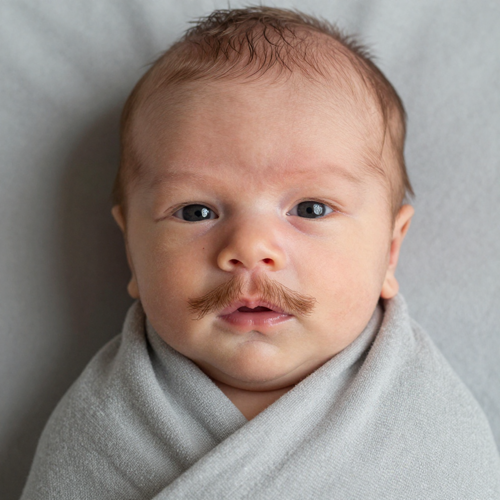
A square frame with the hair already visible works anywhere a reply takes an image. Nobody has scrolled into it, so the hair has to read in the first half second.

Cut to a single gesture, open on the settled face, and end where the clip can restart without a jump. Sound off works in a thread, but sound on is what carries it in a feed.

Once the look holds, the same infant can carry a short run about adult errands: a queue, a form, a long checkbox. Hold the hair, crop and light identical and change only the situation.
Four inputs sit behind a baby born with a mustache clip and they do not carry the same obligations. Choose first.
Four groups hit the same wall from different sides, and with baby born with a mustache the wall is sourcing or timing rather than software.
Reposting a clip nobody can source is the fastest route to a takedown. Building your own version keeps the joke and runs for weeks, not one news cycle.
The wall is tracking, not generation. The hair has to stay fixed to the lip through a head turn, and the cut has to restart cleanly on a loop.
Parents hold the most lawful source material and the most to lose. A consented clip, a lighter density and a caption that names the joke as a joke keeps the post forwardable.
Company handles need the disclosure line approved before the render exists. A generated infant removes consent risk; a visible AI label removes the deception risk.
Six reasons to build a baby born with a mustache clip yourself instead of reposting footage nobody can confirm.
A generated newborn or a consented clip keeps the joke away from a stranger's infant that nobody can identify.
The hair is mapped to the lip line and re-fitted frame by frame, so the gag survives a head turn instead of floating.
Contrast is the point. Proportions, skin and expression stay exactly where they were and only the hair changes.
A single turn or blink carries the laugh further than cuts and zooms, and it is far easier to check for edge flicker.
Vertical framing and a clean loop point let one render sit in a feed, a story and a group chat without a second export.
Synthetic footage should say so in the caption and stay out of any context that reads as news. Building it yourself makes that promise possible.
“Our page had reposted the clip twice and lost both to reports. Building our own newborn meant the joke survived without arguing about where the footage came from.”
“My first version looked fine paused and fell apart the moment the head turned. Re-fitting the hair per frame fixed the slide, and the cut finally looped cleanly.”
“We needed a family-friendly version relatives could forward. A generated face and a caption that names the joke as a joke removed the awkward questions entirely.”
Nine questions that come round every time this format does: where it started, whether it is real, and what you may post.
One piece of found footage, not a template or a sound: a newborn in a hospital crib, eyes opening, head turning, and a thick adult mustache above the lip. Secondary coverage traces the first widely shared post to October 23, 2026, though where it was shot is unconfirmed.
The infant probably is; the facial hair probably is not. Fine newborn down is pale and never forms a thick dark shape, so a full, even mustache is the giveaway. Reviewers noticed the hair shifting at its edges when the baby moved.
The name states the joke literally: an infant arriving already carrying a feature that takes most men two decades to grow. Born retired is the caption formula that followed, with replies describing the newborn as though he were decades into adult life.
Choose the source first, because that decides everything after it. A generated newborn needs no consent; a real infant needs a dated guardian note. Upload, describe the hair, generate, then watch the edges at half speed.
Keep the room quiet. What made the original land was that it sounded like ordinary hospital footage: no sting, just a still room and a voice off frame. Put the caption after the hair is visible, and hold the last frame so the loop restarts cleanly.
Yes. Four starting points cover most of what people want: "photoreal newborn in a plain hospital blanket, soft window light, thick dark chevron mustache above the upper lip, infant proportions unchanged, square crop"; "same newborn, mustache only, no beard, no change to skin, brows or expression, flat hospital lighting, 1:1"; "newborn turning its head slowly toward camera, mustache stays fixed to the lip line, no warping at the edges"; and "vertical 9:16, infant blinking once, mustache visible from the first frame, ends on a rest face so the clip can loop".
Only with consent that covers the use: a dated note from a guardian, scoped to the channels you intend to post on. It matters more here because the subject cannot consent for themselves. A generated face removes the question entirely.
Unlabelled synthetic footage of an infant is what gets into trouble, not the joke itself. Say plainly that it is AI-generated, keep it out of any context that reads as news, and never present it as a real child's condition.
A baby mustache filter is the generic capability: any tool that adds facial hair to an infant face. The named format is the specific scene from late October 2026: a hospital crib, adult-shaped hair, ordinary framing. One is a feature, the other is a scene.
Pick a source you have rights to, add the hair, and cut to the single beat that carries the laugh. Review the first render on Textideo.
No credit card required - no editing timeline - no newborn photo needed