An AI Day of the Dead pet video takes one ordinary photograph of a dog or cat and sets it walking toward you along a path of marigolds at night. The muzzle, the ear set and the coat markings come out of your own picture, so the animal still looks like the one you know. What comes back is imagined imagery rather than recovered footage, and it can stay on your phone or be shared once you have watched it.
Rated by families, pet photographers and rescue volunteers - one photograph in, a gentle tribute out No credit card required - private by default - your photograph stays yours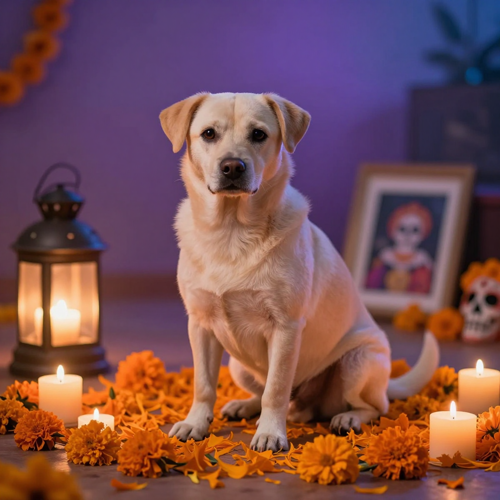
Most households are left holding one good photograph and no way to make it move again. An AI Day of the Dead pet video works inside that limit: one picture in, a short clip out, with the marigold path, the candles and the night already decided. The setting comes out of Dia de Muertos, the Mexican observance on 1 and 2 November when families build ofrendas for the dead. Private or shared is your call, on Textideo.
Make Your Pet Tribute VideoMovement is easy to generate. Recognition is where attempts fall short.
One picture, one fixed scene, one careful look at the result. That is the workflow.
Angle the animal slightly off-centre toward the lens, focus on the eyes and keep the muzzle clear. Even daylight works better than a dramatic flash.
The marigold path, the lanterns and the night are already set. Your animal walks into them.
Check the eyes, the ear shape, the paws and the coat. If one beat slips, run that beat again.
Three levers decide whether the result feels like your animal or a stranger in their coat: the photograph, the pace, and the light.
Different animals, different light, one fixed scene. Each card describes a clip you can render from one photograph.
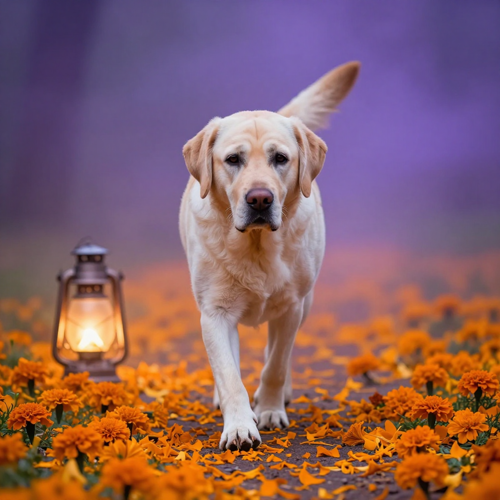
A senior yellow Labrador walks slowly toward the camera down a path of loose orange marigold petals, head level, tail still. Warm lantern light rakes in low from the left, violet-blue mist fills the background, and the grey muzzle is sharpest in frame.
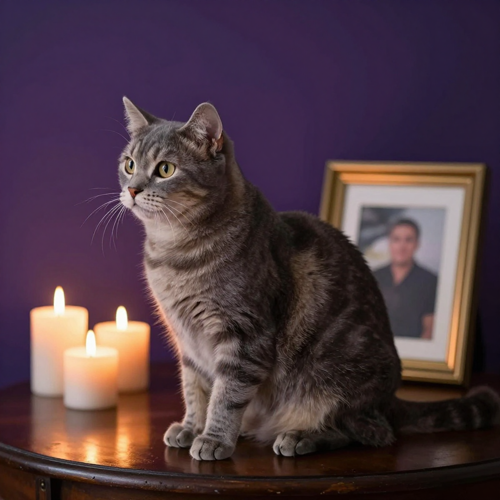
A grey tabby sits in three-quarter view on a low ofrenda table, candles burning behind it and a framed photograph propped at the back. The cat blinks once and turns its head toward the flame, whiskers catching the glow.
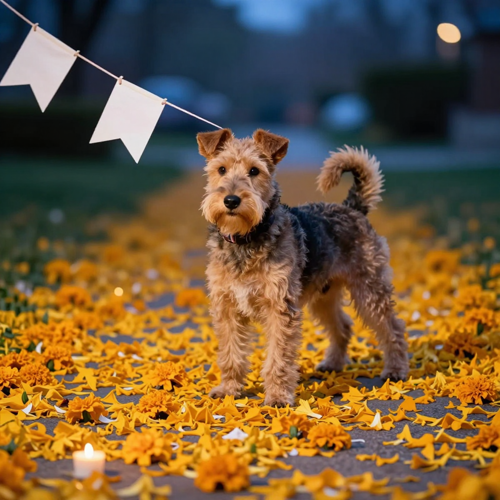
A small tan terrier stands at the far end of the marigold path, ears up, waiting while the camera holds still. Petals scatter across the foreground, one paper banner lifts, and the dog stays whole in frame from nose to tail.
The scene is fixed, but the light inside it shifts. Four versions cover most requests, from a candle-lit ofrenda table to an open garden.
Four groups reach for this effect, and each is short of the same thing: another chance to watch the animal move.
Many households set this day aside for animal companions before 1 and 2 November honour family and ancestors. A short clip gives the ofrenda something that moves.
No album, no footage, one picture on a phone. That is enough to begin, and it is what most people describe.
Shelters and pet pages mark their losses in public. A restrained tribute reads as respect there; a louder one reads as content.
A parent's animal, remembered by the whole family. The clip travels well inside a message, and nobody has to explain how it was made.
Six decisions separate a clip somebody watches twice from one they close after a second.
No script, no camera direction, no prompt to write. One clear picture of one dog or cat is the brief.
A white chin, one dark ear, a tabby stripe. These make a face familiar, and the render is judged on exactly those.
Past that, fur drifts and ears slowly change shape. A short clip keeps the resemblance intact throughout.
A slow blink, a lifted head, one step forward. Asking an animal to run or spin is where anatomy comes apart.
Marigolds, candlelight and night mist do the work, so nothing has to be dressed up.
Nothing is baked into the file. Attach a track you own, or leave it quiet because quiet suits the occasion.
“All I had left was one phone photo in bad kitchen light. I wanted her face, not a cartoon, and the second attempt finally got the white chin and the dark ear right. An AI Day of the Dead pet video gave me something to put beside the collar.”
“Our shelter marks the animals we lose every autumn, and tone is the whole problem. Loud edits read as content and get scrolled past. A slow walk down a marigold path landed differently, and families asked how to make one.”
“My mother's cat was the one thing she talked about after the diagnosis, and no video of him existed. I used one printed photograph, kept it to a few seconds, and sent it with no explanation. She watched it twice and asked for more.”
Practical answers on photographs, length, cultural respect, sharing and what the result actually is.
It is a short clip made out of one pet photograph, set against a fixed Dia de Muertos scene of marigolds, candles and night mist. The animal appears to notice the viewer, move forward, and settle nearby. It is imagined imagery, not footage of a real event.
No. The scene, the light and the camera behaviour are already configured, so the photograph is all you supply. Names, dates and captions get added afterwards in your own editor.
One dog or cat, front or three-quarter view, eyes sharp and muzzle unobstructed. Even daylight beats a flash. Skip pictures where the nose fills the frame, because the model needs space around the head.
Short is what holds attention here. An unbroken take reads as a moment and keeps fur texture stable, while a longer cut drifts and softens the muzzle.
Usually, though not on every attempt. Check the eyes, the ear set and any distinctive marking such as a white chin before you keep the result. When a detail slips, running that attempt again often repairs it.
It borrows the imagery, so it deserves care. The holiday is a Mexican observance on 1 and 2 November built around ofrendas, marigolds, candles, water and photographs of the dead. Keep the tone affectionate and never present the result as anything but a made image.
Yes. Plenty of people animate a living dog or cat for the season, and the marigold setting behaves the same way. Remembrance is simply the most common reason people go looking in late October.
Watch the whole clip instead of judging one flattering frame. Look at the paws, the proportions and the expression, then decide who should see it. Say plainly that an AI Day of the Dead pet video is generated.
No. The AI Day of the Dead pet video export arrives silent, which leaves the audio choice and the licensing with you. Add a track you own in your editor, or leave it quiet.
Yes, and it is worth doing. Running two or three AI Day of the Dead pet video attempts out of the same photograph costs little and usually produces one take where the face holds. Keep that one.
Bring one photograph, let the marigold path and the candles do the rest, then watch the clip through before deciding. An AI Day of the Dead pet video comes back silent and vertical, so you choose the sound and the audience, or keep it to yourself on Textideo.
No credit card required - private by default - your photograph stays yours