
The FFmpeg GUI Editor Windows Users Trust With Their Footage
An FFmpeg GUI editor Windows users can open, click through, and export from turns the most powerful video toolkit on the planet into something genuinely friendly. Trim a clip, crop the dead space, shrink a 4K file for Discord, or convert a folder of MOVs to MP4 without memorizing a single flag. It is the engine you already trust, minus the terminal.
Rated on what Windows users judge a video tool by: lossless cuts, queues that don't die, zero commands memorized. No credit card required - no command line - no watermarks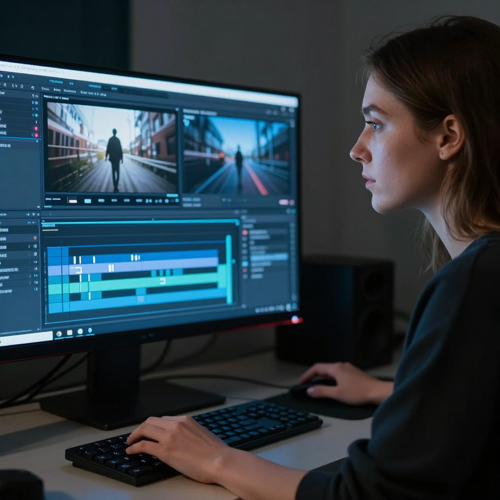
Run FFmpeg Without Living in a Terminal
Drag a clip in, pick what happens next, and let the queue do the rest. An FFmpeg GUI editor Windows setup on Textideo turns command-line chores into push-button edits: lossless trims, subtitle sync, batch compression, one-click conversion.
Start Editing Without CommandsThe Hard Part With FFmpeg GUI Editor Windows: The Interface Is You
FFmpeg is free, powerful, and shaped like a black window with a blinking cursor.
Raw Clip to Finished File in Three Steps
No extra installs, no PATH surgery, no scripts. The three steps below are the entire job.
Drop In Your Footage
Open the editor and drag your video onto the timeline. Set in and out points for a lossless trim; the editor writes the -ss and -to values and copies streams instead of re-encoding.
Set the Edit Visually
Drag the crop box, slide the quality control, move the subtitle track, and pick a format. Every change previews before the encode runs, the quiet difference an FFmpeg GUI editor Windows user feels in minute one.
Export, Queue, or Copy the Command
Hit export for one file, or queue the whole folder with per-file logs. Want the raw line? Copy the exact command the job generated into your own script.
What the FFmpeg GUI Editor Windows Experience Gives You
Under the hood, the FFmpeg GUI editor Windows users click through is still plain FFmpeg: same encoders, same filters, same output quality.
Real Edits, Real Files: The GUI at Work
These are the jobs an FFmpeg GUI editor Windows session turns into a quiet afternoon of clicking instead of a night of copying syntax and hoping the quotes survive.
The Lossless Cut That Didn't Re-Encode
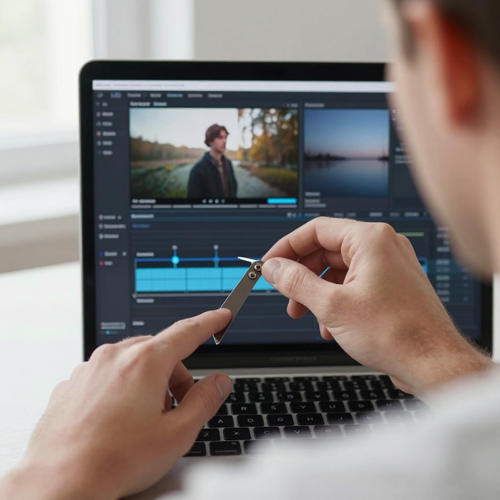
A 12-minute clip trimmed to the 90 seconds that matter. The editor copies the streams untouched, so the export finishes as fast as a file copy and the quality stays identical.
The Discord Compress Run
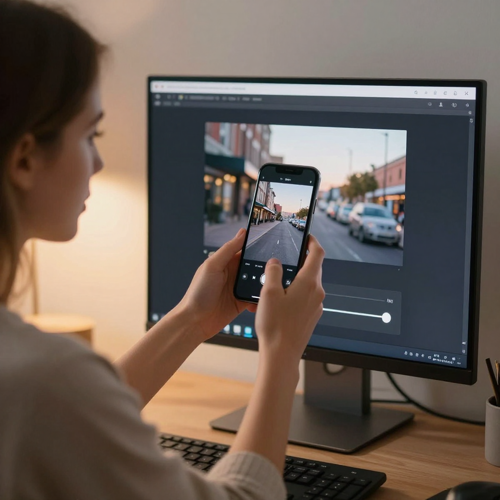
A 4K phone video squeezed under the upload limit with a quality slider instead of a CRF lookup table. One saved preset then handles every clip the group chat needs.
The MP4-to-GIF Round Trip
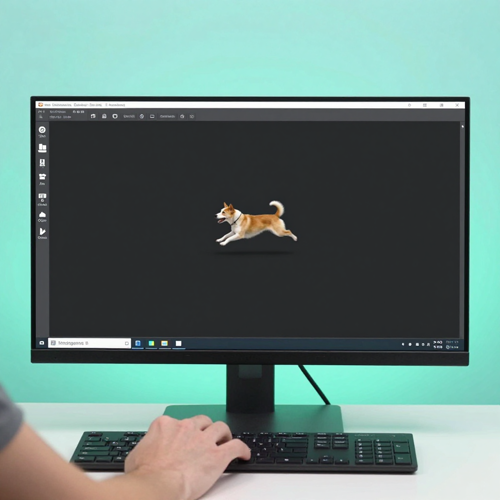
A three-second moment exported as a looping GIF at 10 fps, scaling handled automatically. That is the classic -vf fps=10,scale=480:-1 recipe, minus the quoting bugs that make it fail at midnight.
Every Format the FFmpeg GUI Editor Windows Version Supports
The input list reads like a format museum; the output list is the same museum with an exit door.
Who Struggles With Raw FFmpeg, and Who Switches to a GUI
Almost nobody hunting an FFmpeg GUI editor Windows page like this wants to become a command-line expert. They want their video fixed and their evening back.
Everyday Windows Users With One Clip to Fix
A vertical clip that needs rotating, a file too big for email, a recording with a slow start. One window fixes all three in five minutes.
Content Creators and Community Managers
Daily uploads mean repetitive compression, subtitle sync, and format changes. Presets and batch queues turn that grind into background work.
Archivists and Media Library Owners
Converting hundreds of old files is exactly the batch job an FFmpeg GUI editor Windows queue view was built to chew through, with per-file logs.
Developers Who Still Prefer Buttons for Routine Jobs
Even people who write filter graphs by hand use a GUI for the boring stretch: quick trims, test encodes, and one-off conversions.
The FFmpeg GUI Editor Windows Workflow, At a Glance
- HandBrake
- Shutter Encoder
- Videomass
- LosslessCut
- FFmpeg Batch AV Converter
Why an FFmpeg GUI Editor Windows Workflow Beats Memorizing Flags
The FFmpeg GUI editor Windows users deserve keeps the engine and deletes the memory test. FFmpeg itself almost never fails; the human typing the command does.
An FFmpeg GUI Editor Windows Users Trust With Batch Jobs
Load a folder, pick a preset, and walk away. Queue-based editing keeps FFmpeg's batch muscle and drops the .bat loops nobody remembers under pressure.
Visual Controls Beat Flag Guesswork
Crop by dragging a box. Set quality with a slider instead of arguing with -crf values. Every control maps to a filter you would otherwise mistype.
Lossless Cuts Without the Re-Encode Gamble
Stream copy with -c copy is instant, but the argument order is unforgiving. A timeline trim gives frame-accurate lossless cuts by default, the signature move of any serious FFmpeg GUI editor Windows toolbox.
The FFmpeg GUI Editor Windows Exports Still Show the Command
The better front ends display the exact CLI line they build, so a GUI session doubles as a slow, painless command-line course. You learn the flags by watching them work.
One Window for Every Format You Own
MP4, MKV, MOV, WebM, AVI, GIF, MP3, FLAC: a dropdown replaces the codec study. The converter that shrinks a Discord clip also archives your camera roll.
Presets Turn Repetitive Work Into One Click
Save a compression recipe once and reuse it on next month's footage. Presets separate a tool you visit once from a tool you live in.
What Editors Say About Their FFmpeg GUI Editor Windows Switch
“I kept a text file of copied FFmpeg commands and still pasted them wrong. Last month I trimmed forty clips for a client reel without typing a single flag.”
“Every training video used to die at the upload limit. One compression preset took twenty minutes to set up and has quietly handled every upload since.”
“I resisted a GUI because real editors used the terminal. A deadline taught me that frame-accurate cuts and a visible command line beat my fragile batch scripts.”
FFmpeg GUI Editor Windows Questions, Answered
Ten honest questions from the exact spot where FFmpeg GUI editor Windows searches usually begin: command-line fatigue. Every answer is direct and jargon-light.
What is a FFmpeg GUI editor for Windows?
It is a graphical front end that drives the FFmpeg engine with windows, sliders, and timelines instead of typed commands. A FFmpeg GUI editor Windows setup does the same trims and conversions, because it writes real FFmpeg commands behind every click.
Do I need to install FFmpeg separately or edit the PATH variable first?
With a bundled front end, no. The editor ships with the engine or finds it automatically, skipping the ritual of unzipping into Program Files and hand-editing environment variables. If a tool demands PATH surgery, that is a tool problem.
Can a GUI trim videos losslessly like the command line can?
Yes, and this is where a good front end shines. A timeline trim with stream copy skips re-encoding entirely, keeping quality bit-for-bit identical and finishing in seconds on big files. The GUI simply places the -ss, -to, and -c copy values in the right order.
How do I burn subtitles into an MP4 without fighting the subtitles filter?
Load your SRT, drag it against the audio waveform until the sync looks right, and export. The visual route replaces the subtitles= filter syntax, and most editors preview the burn before committing an hour to it.
Is a GUI front end slower than typing commands directly?
No. The GUI hands the same command to the same engine, so encode time is identical. The only overhead is mouse travel, far cheaper than re-searching a syntax guide for the third time this month, which is why the FFmpeg GUI editor Windows workflow exists.
What is the difference between HandBrake, Shutter Encoder, and a general FFmpeg GUI editor?
HandBrake is its own encoder app with a fixed container list; Shutter Encoder is a sprawling broadcast toolbox. A general FFmpeg GUI editor exposes more of the raw engine while keeping the whole surface clickable.
Can an FFmpeg GUI editor Windows queue handle an entire folder at once?
Yes, and batch work is the biggest reason Windows users abandon the terminal. Drag a folder in, pick a preset, and let the queue run. Per-file logs mean one corrupt clip no longer kills the batch.
Will compressing a video for Discord hurt the quality?
Re-encoding rewrites the picture, but a sensible quality slider keeps the change invisible at phone and monitor sizes. The encoders are the ones streaming services rely on, so a target-size preset lands soft uploads without mushy output.
Can I see or copy the FFmpeg command the GUI creates?
The better front ends show the exact command line behind every job, and some add a copy button. An FFmpeg GUI editor Windows session therefore doubles as a painless CLI course, and one-off jobs can graduate into your own scripts.
Are FFmpeg GUI editors free and safe to use on Windows 10 and 11?
Most front ends are free and open source, since the engine underneath is LGPL and GPL licensed. Download only from official project pages, keep the app and its libraries together, and Windows Defender stays quiet on Windows 10 and 11.
Make the FFmpeg GUI Editor Windows Switch Today
Your footage is already on the drive. Close the terminal and open a window: drag your first clip in on Textideo.
No credit card required - no command line - no watermarks