
AI Trouble Maker Video: Put Two Faces in One Routine
An AI trouble maker video takes two separate portraits and drops both people into one prepared partner routine, the sequence cover duos have copied for fifteen years. Photo one is whoever stands on the left when the pair first shares a frame, photo two is whoever stands on the right, and those roles survive the moment they trade sides. Nothing to write, no reference clip to source, no choreography to learn: two clean faces in, one shared scene out.
Rated on the two things that decide a two-person clip: whether both faces survive the crossing, and whether the cast stays put. No prompt - no reference clip - two portraits in, one duo out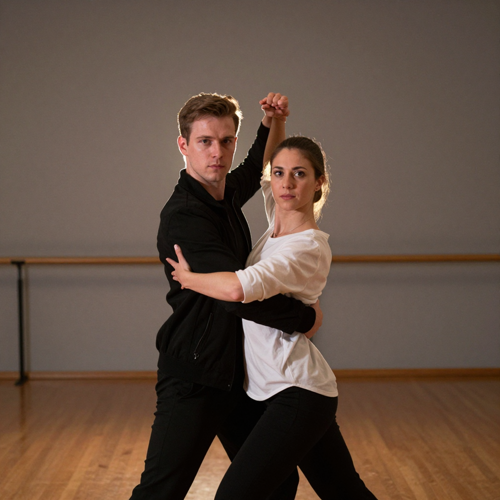
Two Portraits In, One AI Trouble Maker Video Out
The effect casts two separate people into one prepared partner routine and leaves the camera, the beat and the crossing to the reference. On Textideo the cast is the only variable you touch. Photo one takes the left, photo two takes the right, and both keep those seats after the pair trades sides.
Put My Duo in the SceneThe Hard Part With AI Trouble Maker Video Is the Crossing
Three places a first render goes wrong.
Make an AI Trouble Maker Video in Three Steps
Pick the pair, give each person a clean portrait, then review the render for faces first and sides second.
Pick A Pair Who Read As A Duo
Two adults who agreed to appear: a couple, two friends, two collaborators. One person alone loses the back-and-forth the partnering is built on.
Upload Two Separate Portraits
One photo each, face clear and unblocked, no second person in the crop, no sunglasses. A group shot cannot be split into two identities.
Generate, Then Check Faces And Sides
Watch once following the two faces, then once following left and right. A swap in an AI trouble maker video shows as one person's hair or jacket landing on the other body.
What an AI Trouble Maker Video Gives You
Three things the prepared routine does that a hand-built prompt does not: it holds a cast, it holds a beat, and it keeps the clip short.
Three AI Trouble Maker Video Casts That Hold
Three castings worth trying: a couple who bicker on camera, two friends with different silhouettes, and two collaborators photographed months apart.
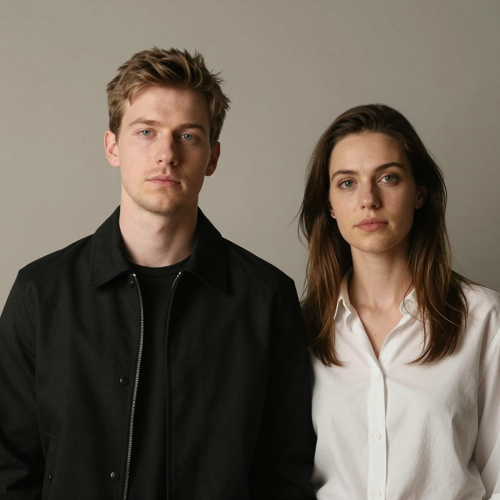
The Couple Who Argue On Camera
Two European adults in their late twenties, one in a black jacket and one in a white shirt, shoulder to shoulder against a plain wall. Different hair length keeps the two apart.
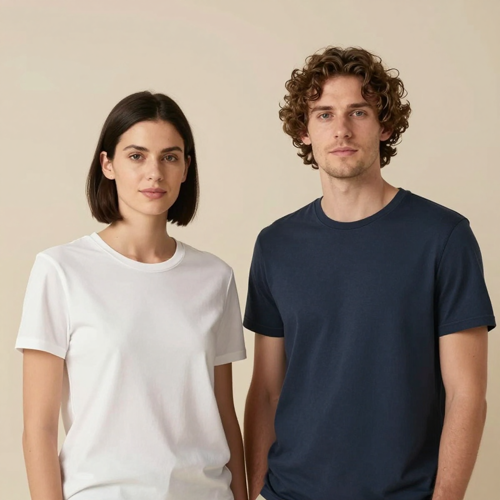
The Friends With Different Outlines
A Caucasian woman with a short bob beside a Caucasian man with longer curls, both in plain tees, framed waist-up on a neutral background. Contrast in outline is what stops a swap in an AI trouble maker video before it starts.
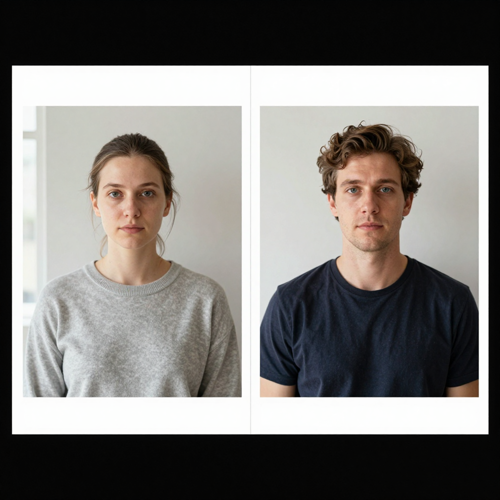
The Two-City Collaboration
Two portraits taken months apart in different rooms, matched on framing, light direction and background tone. Nothing here needs both people in one photograph.
What to Feed the Two-Photo Effect
Four inputs, and what each does to an AI trouble maker video. The first two are required; the rest decide how much of the pair survives the crossing.
Who Struggles With AI Trouble Maker Video, and Why
Four kinds of pairing, and the reason each one breaks on the first attempt.
Couples With No Photo Together
Every picture you own is one of you holding the phone. Two separate portraits are easier than a shoot and harder than a scroll, which is the gap this fills.
Friends In Different Cities
You have never been in the same frame and will not be this year. Two phones, two portraits, one scene, and no flight to book.
Creators Running an AI Trouble Maker Video Series
You want the same format back next week with a new pair. The routine stays fixed and only the cast changes, which is how a one-off becomes a slot in a schedule.
The Friend Who Got Asked To Make One
Someone wants a clip by Friday and you are the one with the account. Knowing the photo rules up front saves three re-rolls and an awkward follow-up.
No Prompt, No Reference Clip, No Shoot
- TikTok
- Instagram Reels
- YouTube Shorts
- CapCut
- Canva
Why AI Trouble Maker Video Beats A Face Swap Template
A face swap pastes a face into existing footage. This generates the pair, so the body, the outfit and the timing come from the two photos you supplied.
Two People, Not One Face On A Stranger
A swap keeps the original performer's body and wardrobe and paints a face over it. Here both people come from their own photos, so the jacket on the left belongs to the left person.
No Prompt To Draft And Re-Draft
Hand-built duo prompts run long and still drift. This instruction set is short, fixed and already tested against the routine, so the only variable is your cast.
The Crossing Is Built Into AI Trouble Maker Video
Roles bind to the photo rather than to screen position, so a side swap reads as a side swap instead of a recast halfway through the clip.
Cheap Enough To Take Three Times
One generation is a take, not a promise. Expect several looks per usable clip, and change one variable between runs rather than re-rolling blindly.
Audio Ships With The AI Trouble Maker Video
The reference carries its own track and beat, so nobody hunts for a sound that fits the counts. Swap it only for audio you can genuinely post.
Built For A Pair You Can Defend
Both faces come from people who agreed, the result gets labelled, and nothing here needs a public figure to work.
What Duos Say After the First Render
“Every photo of us was one of me holding the phone, so the idea sat in drafts for months. Two portraits and we were in the same AI trouble maker video that night.”
“I used to write a paragraph about the dance and re-roll until it looked close. With the staging already built, the only thing I control is who appears.”
“We cast two colleagues and had to explain twice that both had agreed in writing. That consent step is the part no tutorial covers.”
AI Trouble Maker Video Questions, Answered Plainly
Origin, the name, photo rules, clip length, audio, near-synonyms and consent - the short answer to each.
Where does the AI trouble maker video trend come from?
A 2011 stage routine. A two-member co-ed unit debuted that partner dance in December 2011, returned once in 2013, then went quiet. Broadcast standards pushed the pair into a tamer version within weeks, and that edited routine is what cover duos have copied for fifteen years. Image models only began holding two faces at once around 2025, which is when it became something you generate instead of learn.
What does the name trouble maker actually mean here?
In an AI trouble maker video the name covers the characters, not the tool. The two performers play a pair who keep provoking each other: a pull-in, a shove away, a look held a beat too long. One person can be generated, but the provocation has nowhere to go.
How do I make one with no editing skills?
Choose two adults, give each one a clean portrait, generate, then review twice: once following the faces, once following who stands on the left. If a face slid onto the wrong body at the crossing, retry with two people who differ more in hair and clothing.
Which portrait becomes which person?
Photo one is the person on the left in the first frame where both appear; photo two is the person on the right. Those assignments stick when the pair trades sides, so the left-hand upload stays bound to that person, not to that side of the frame.
Do I need to write a prompt or upload a reference clip?
No on both counts. The effect carries its own instruction set and its own reference clip, which is why the input is two photos. Whatever you would have written in a prompt is better spent on the photos: one person per frame, plain background, even light.
How long is the clip, and why does the end go soft?
Roughly five seconds per generation, about as long as two bodies in contact stay coherent. Push further and the second half is where hands blur and faces drift. For a longer post, cut two takes together rather than stretching one.
What about the music under it?
The built-in reference arrives with its own track and beat, so the counts already line up. Replacing it is allowed but carries risk: use a licensed bed or a platform music library, never a commercial recording you do not control.
Is this the same as an AI dance generator or a two person AI video?
They overlap but answer different searches. An AI dance generator usually means any routine applied to any photo; a two person AI video is the wider idea of putting two people in one shot. An AI trouble maker video is one fixed partner routine with two fixed cast slots: narrower, and easier to land.
Whose photos am I allowed to use?
Your own face, or an adult who said yes and knows where the clip is going. Not an ex, not a colleague who has not seen it, not a public figure, never a minor. And not to settle a grudge, imply something happened, or stand in for evidence.
Do I have to label the result as AI-generated?
Most platforms expect it now, and several attach provenance metadata on upload. One caption line costs nothing and settles the argument later. Keep the partnering inside what the platform will show too; a tamer crop is cheaper than a takedown.
Cast Your Duo Before the Joke Gets Old
Two portraits, one prepared routine, one look at the sides before you post. An AI trouble maker video is decided by the photos: cast people who said yes, and label the result.
No prompt - no reference clip - two portraits in, one duo out